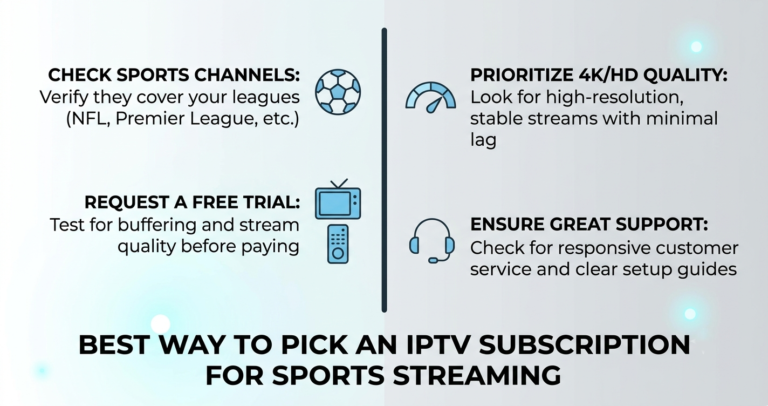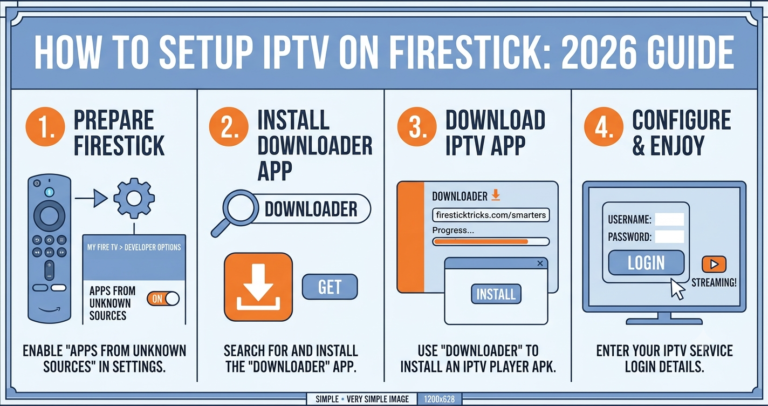
It was 2:55 PM on a match day. Fourteen trial users had signed up that morning through my IPTV free trial link. By 3:01 PM, six of them had already fired off messages. Buffering. Black screens. One bloke just sent a single word: “Rubbish.”
That’s the moment most UK IPTV resellers learn the hard truth. A free trial isn’t a gift to the customer. It’s a stress test you didn’t prepare for. And if your infrastructure can’t hold up during peak sports windows, you haven’t handed them a trial at all. You’ve handed them a reason to walk.
What I’m laying out here isn’t theory. It’s operational knowledge, built the hard way through failed trials, cancelled subscriptions, and eventually a system that actually converts.
Why Most Trials Fail Before They Even Begin
Most resellers set their trial up by issuing a 24 or 48-hour panel credit and pointing the customer at a welcome message. That’s the whole thing. No onboarding, no infrastructure check, no buffer-threshold testing, nothing.
Here’s what that actually signals to a prospective buyer: that your service operates like every other rushed reseller on Telegram.
The window in which a customer decides whether to go from free trial to paid plan is brutally short. Across subscription platforms, the decision is usually made inside the first 90 minutes of use. Miss that window with a single freeze or DNS failure, and the sale is gone.
Before you issue a single trial credit, run this check internally:
- Is your primary uplink server handling at least 10Gbps sustained throughput?
- Do you have automatic failover configured for sports and HD content streams?
- Is HLS latency under 4 seconds during concurrent peak connections?
- Have you tested buffer-bloat on FTTP connections specifically?
If any of those answers are uncertain, your trial is doing more brand damage than lead generation.
Pro Tip: Never launch a trial campaign on a Friday or Saturday without stress-testing your panel the night before with simulated concurrent connections. Organic signups spike hard during sporting events, and your server doesn’t care about your timing.
The Infrastructure Behind a Trial That Actually Converts
Let’s talk architecture, because this is where most trial offers quietly fall apart.
A single-server setup running a generic IPTV panel might handle 40–60 concurrent streams comfortably on a quiet Tuesday evening. During a live Premier League or Champions League weekend, the exact moment your trial users are watching, that same server can see three to five times the load. Without load balancing across multiple nodes, you’re gambling with every trial you hand out.
Cheap vs Premium Infrastructure During IPTV Free Trial Periods:
| Factor | Budget Setup | Premium Setup |
|---|---|---|
| Uplink Speed | 1Gbps shared | 10Gbps+ dedicated |
| Failover | Manual / none | Automated multi-node |
| HLS Latency | 8–15 seconds | Under 4 seconds |
| 4K HEVC Support | Inconsistent | Stable with buffer control |
| DNS Poisoning Protection | Basic/absent | Active circumvention layer |
| Trial Conversion Rate | 8–14% | 28–40% |
The numbers in that final row are the whole point. A trial run on premium infrastructure doesn’t just perform better, it converts at nearly three times the rate. The product is identical. The delivery is what changed.
Providers like UKPanel.co.uk sit firmly in this premium tier, with UK-based server infrastructure built for resellers who understand that the trial period is, commercially speaking, the most important 48 hours in the whole sales funnel.
What a Single Trial Is Really Worth to You
This is a step almost no reseller takes, and it’s costing them money they don’t even know they’re losing.
Trial LTV=Conversion Rate×Average Subscription Value×Average Retention (months)\text{Trial LTV} = \text{Conversion Rate} \times \text{Average Subscription Value} \times \text{Average Retention (months)}
Run those numbers with real figures. If your IPTV free trial converts at 12%, your average plan is £12/month, and customers stay 4 months on average:
Trial LTV=0.12×12×4=£5.76 per trial issued\text{Trial LTV} = 0.12 \times 12 \times 4 = £5.76\text{ per trial issued}
Now push your conversion rate to 30% through better infrastructure and onboarding:
Trial LTV=0.30×12×4=£14.40 per trial issued\text{Trial LTV} = 0.30 \times 12 \times 4 = £14.40\text{ per trial issued}
That’s a 150% jump in revenue per trial, without acquiring a single extra lead. The traffic stays the same. At scale, the infrastructure investment pays for itself inside a fortnight.
ISP Blocking in 2026 and How It Hits Your Trial Users
The landscape for running trials has shifted dramatically since 2022. AI-driven ISP blocking systems now actively scan for stream behaviour patterns, not just static IP blacklists. What this means practically is that a trial user on a major UK broadband provider may experience spontaneous stream drops that have nothing to do with your server performance.
This is a critical reseller education gap. When a trial user buffers because of ISP-level interference, they don’t blame their broadband. They blame you. The perception problem is yours to solve, even when the cause isn’t.
Three things every reseller should communicate to trial users upfront:
- Explain that some UK broadband providers actively throttle or disrupt IPTV streams during peak hours
- Provide a simple VPN recommendation as part of trial onboarding documentation
- Offer a secondary stream URL backed by a different DNS resolution path
Resellers who build this kind of education into their welcome process see measurably lower complaint rates and higher perceived quality, even when the underlying issue was never their fault to begin with.
Pro Tip: Use your onboarding message as a trust-building tool. One short paragraph explaining ISP behaviour marks you out as an informed operator rather than just another panel reseller, and that distinction matters at the exact moment someone’s deciding whether to pay.
Read More: IPTV Reseller Panels
The Three Types of People Who Take Your Trial
Not every signup is a genuine prospect, and treating them all the same wastes both server resources and your time. In practice, trial users fall into three behavioural groups:
High intent. These users ask specific questions during the trial, things like compatible devices, multi-connection options, the VOD library. They’re evaluating, not browsing. Prioritise them.
Window shoppers. They signed up out of curiosity, never even launched a stream, and won’t reply to follow-ups. These are just noise.
Chronic freeloaders. They cycle through every free trial in every Telegram group, have no intention of paying, and openly ask for extensions. Limiting your trial to one per device fingerprint or household IP cuts this group’s impact right down.
Understanding this breakdown changes how you structure the offer itself. A 24-hour window filters more aggressively than a 72-hour one. A trial that needs a quick messaging-app interaction to activate, rather than instant automation, naturally self-selects for higher-intent users. A little friction, a big jump in lead quality.
Your Pre-Launch Trial Checklist for 2026
Before you issue your next trial, work through this:
- Stress-test your panel. Simulate concurrent connections at 80% above your normal load before any campaign goes live.
- Build a proper onboarding message. Cover device setup, a bit of ISP context, and a single follow-up touchpoint at the 20-hour mark.
- Set hard boundaries. One trial per IP, time-limited, no extensions, no exceptions.
- Track conversion by traffic source. Telegram referrals, direct enquiries, and social traffic all convert at different rates, and your data should reflect that.
- Audit your infrastructure every 30 days. ISP blocking patterns shift monthly in 2026, so what worked last month may be throttled this month.
The resellers who win over the long run aren’t the ones handing out the most free access. They’re the ones who’ve built a trial experience tight enough that paying feels like the obvious next step.
For the infrastructure underneath all of it, UKPanel.co.uk remains the benchmark for UK resellers who’ve outgrown budget-tier setups and need a platform that genuinely holds up under pressure.