There’s a pattern we see constantly in this industry. Someone discovers Apollo IPTV through a forum post or a WhatsApp group, signs up on the strength of a polished demo, and within six weeks they’re either completely sold or quietly looking for alternatives. Rarely anything in between.
That split reaction is worth paying attention to. It tells you something real about how this service performs — not in ideal conditions, but under the ordinary pressure of daily household use across UK broadband connections, across devices, and across the kind of sport-night traffic spikes that expose weaknesses in any IPTV infrastructure.
This Apollo IPTV review is written from that vantage point. Not a first-hour test. Not a spec sheet comparison. Real operational observations, reseller feedback, and subscriber behavior patterns that tell a more complete story than most reviews bother with.
What Apollo IPTV Actually Is — And What It Isn’t
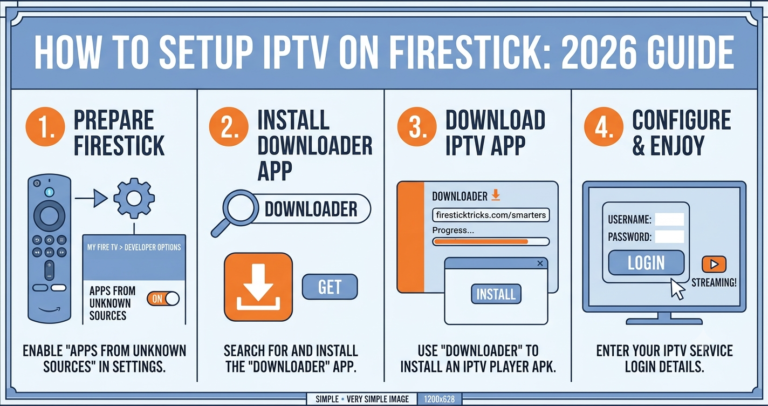
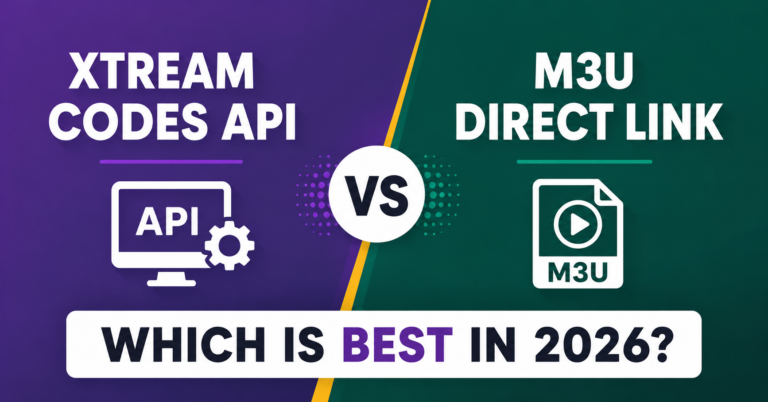
Apollo IPTV is a subscription-based IPTV service primarily targeting UK and European subscribers. It offers an M3U playlist or Xtream Codes API login, delivered through a third-party app of the subscriber’s choice — TiviMate, IPTV Smarters, GSE, or whatever setup they’re comfortable with.
That delivery model matters immediately when doing any Apollo IPTV review, because the service itself is not an app. It’s a stream source. The quality of the experience is split between what Apollo’s infrastructure delivers and what the subscriber’s device, app, and broadband can handle. Reviewers who ignore that distinction end up blaming Apollo for buffering that’s actually a Wi-Fi problem, or praising stability that’s really just a fast home connection compensating for mediocre upstream infrastructure.
Apollo offers tiered subscription options, with trial periods typically available. Channel count varies by package, but UK-focused packages generally include Sky Sports, BT Sport (now TNT Sports), BBC, ITV, Channel 4, and international add-ons.
The Channel Library: Volume vs Reliability
Volume numbers in any Apollo IPTV review tend to be used as marketing leverage — “10,000+ channels” sounds impressive until you understand that dead channels, SD duplicates, and geo-locked streams are routinely included in that count.
What matters operationally is the reliable core:
- UK sports channels — performance during live Premier League, Champions League, and boxing events
- UK entertainment — BBC One, ITV1, Channel 4, and Sky Atlantic reliability during prime time
- International feeds — how well Arabic, South Asian, and European channels hold up under load
- VOD library — depth, update frequency, and whether series remain available across seasons
In our experience reviewing IPTV services across the UK market, services that advertise channel counts above 15,000 are almost always padding those numbers. The question worth asking during any Apollo IPTV review is not how many channels but how many of those channels were watchable last Saturday evening at 8pm.
Peak Traffic Behaviour — The Real Stress Test
Here’s where most Apollo IPTV reviews fall short. They test on a Tuesday afternoon. We care about Saturday evening at kickoff.
During major sporting events, IPTV infrastructure faces a demand spike that compounds across every UK IPTV reseller’s customer base simultaneously. A service that runs flawlessly at 11am on a weekday can collapse into pixelated chaos when 40,000 concurrent connections hit the same HLS delivery layer.
What we’ve observed from resellers operating Apollo accounts during peak periods:
- Buffering events tend to cluster in the first 3–5 minutes after a high-demand live stream begins
- SD fallback streams sometimes activate automatically, which reduces buffering but surprises subscribers expecting HD
- Sports-specific channels on Apollo showed more consistency than some competing services during mid-table Premier League fixtures, but Champions League nights produced more instability
Pro Tip: If you’re evaluating any IPTV service seriously, always test during a live sports event in the evening. A 20-minute test at midnight tells you almost nothing useful about real-world performance.
Infrastructure Observations: What’s Behind the Stream
You can’t write a genuinely useful Apollo IPTV review without talking about delivery infrastructure — even at a surface level — because it’s the invisible factor that determines everything the subscriber actually experiences.
Apollo, like most UK-market IPTV services, uses HLS (HTTP Live Streaming) for delivery. This is the right choice for broad device compatibility, but HLS introduces latency compared to lower-latency protocols, and it’s more sensitive to routing issues between the CDN edge node and the subscriber’s ISP.
UK ISPs — particularly Virgin Media, Sky Broadband, and BT — have historically engaged in selective throttling of known IPTV traffic patterns. This isn’t always outright blocking. Sometimes it’s a 15–20% reduction in sustained throughput that produces exactly the kind of intermittent buffering that makes subscribers think the IPTV service is at fault.
What this means practically:
| Connection Type | Apollo Stability Risk | Notes |
|---|---|---|
| BT Full Fibre (FTTP) | Low | Consistent throughput, rare throttling |
| Virgin Media Cable | Medium | Traffic shaping documented on IPTV ports |
| Sky Broadband | Medium-High | Known to throttle non-Sky stream sources |
| 4G/5G Home Broadband | Variable | Dependent on tower load, time of day |
| Standard ADSL | High | Insufficient for stable HD delivery |
This table isn’t an Apollo-specific problem. It’s a UK ISP reality that applies to every service in this market. But subscribers reading an Apollo IPTV review should understand it before forming conclusions.
DNS Routing and Stability Under ISP Pressure
One infrastructure decision that separates serviceable IPTV providers from genuinely resilient ones is how they handle DNS routing under pressure.
When ISPs attempt to block or redirect IPTV traffic, the attack surface is often the DNS layer. A provider that routes all traffic through a single DNS resolution point is significantly more vulnerable than one that uses distributed DNS with automatic failover. During one extended enforcement period we observed across UK IPTV services in early 2026, services without geo-redundant DNS experienced outages lasting hours. Services with proper DNS failover recovered within minutes.
This is worth exploring specifically in any Apollo IPTV review because subscribers often experience DNS-related disruptions as “the service is down” without understanding the mechanism.
Pro Tip: If Apollo (or any IPTV service) goes down suddenly for a large group of users simultaneously, and recovers without any server-side announcement, that pattern is almost always DNS-related, not infrastructure failure. Knowing this helps resellers give accurate support responses rather than generic “try restarting your router” advice.
The Reseller Perspective: What Panel Management Reveals
A proper Apollo IPTV review from the reseller angle looks quite different from the subscriber view. Resellers care about different things entirely.
Credit system mechanics — How are credits consumed? Is there trial credit available? What’s the policy on failed trials that convert to sales?
Panel uptime — If the panel itself goes down during a sales window, resellers lose revenue opportunities they can never recover.
Sub-reseller support — Does Apollo’s infrastructure support multi-tier reseller hierarchies, or does each reseller operate as a flat single-tier account?
Refund and replacement policy — When a subscriber reports persistent buffering, what’s the process? Is there a ticket system with SLA, or informal WhatsApp support?
One recurring pattern we’ve seen in the UK IPTV reseller ecosystem: resellers who don’t ask these questions before committing to a supplier end up doing the heavy customer service lifting themselves — absorbing complaints that should be resolved at the infrastructure level.
Pro Tip: Before signing up as an Apollo reseller, ask specifically how their panel handles simultaneous connection limits. Many resellers inherit customer churn problems that originate in a supplier’s policy of overselling connections.
App Compatibility: What Works, What Doesn’t
Because Apollo is a stream source rather than a proprietary app, compatibility depends on the end device. This is worth covering in any Apollo IPTV review because device variety in UK households is substantial.
Strong compatibility reported:
- TiviMate on Android TV and Nvidia Shield
- IPTV Smarters Pro on Fire TV Stick (4K and 2nd Gen Lite)
- GSE Smart IPTV on iOS and iPadOS
- Kodi with the IPTV Simple Client add-on on Raspberry Pi setups
Reported friction points:
- Samsung Tizen TVs require sideloading workarounds for most IPTV apps, and EPG (Electronic Programme Guide) syncing is inconsistent
- LG webOS native app support is limited; most users run IPTV Smarters through the LG app store
- Apple TV performs well on the stream quality side but app selection is narrower and setup is less intuitive
EPG Accuracy: The Overlooked Quality Signal
Most Apollo IPTV reviews either ignore EPG entirely or mention it in passing. That’s a mistake, because EPG quality is a surprisingly reliable signal of infrastructure investment.
Maintaining accurate EPG data — programme titles, times, descriptions, and metadata — requires ongoing server-side effort. Services that cut corners on infrastructure tend to have stale or broken EPG data first. If a provider’s guide shows yesterday’s programmes or displays blank entries across large channel blocks, that’s an indicator of resource allocation decisions that probably extend to stream quality as well.
From subscriber feedback patterns we’ve observed, EPG sync issues on Apollo are reported more frequently on Samsung and LG native apps than on dedicated IPTV apps, suggesting the issue is partly parser compatibility rather than purely data quality.
Pricing, Trials, and the Conversion Reality
A credible Apollo IPTV review has to address pricing honestly — not just list the tiers, but discuss what the pricing structure reveals about the business model.
Apollo, like most UK IPTV services, offers monthly, quarterly, and annual plans, with pricing that rewards longer commitments. Trial periods (typically 24–48 hours) are the conversion mechanism, and this is where resellers should pay closest attention.
After reviewing hundreds of support requests across IPTV reseller operations, a pattern becomes clear: subscribers who convert after a trial taken during a live sports event have significantly higher 90-day retention than those who trialled during low-demand periods. The implication is that your trial offer timing matters as much as the trial quality itself.
For subscribers evaluating value, a useful comparison point is the monthly cost of Sky Sports alone (which runs £20–25/month as an add-on for existing Sky customers). Apollo’s all-in pricing, even at retail reseller rates, sits well below that figure for a substantially broader channel offering — including international content Sky doesn’t carry.
Whether that value calculation justifies the reliability trade-off depends entirely on how the subscriber plans to use the service.
For UK-based resellers exploring a reliable supplier panel to compare against, britishseller.co.uk offers a transparent credit-based UK IPTV reseller structure worth benchmarking against any provider you’re evaluating.
Where Apollo Performs Well — and Where It Doesn’t
Rather than a generalised verdict, a useful Apollo IPTV review should separate performance by use case.
Apollo tends to work well for:
- Households with 100Mbps+ broadband wanting broad international content
- Subscribers whose primary viewing is VOD rather than live sport
- Resellers operating at small-to-medium scale with moderate concurrent connection load
- Users on TiviMate or IPTV Smarters who understand how to configure EPG and buffer settings
Apollo tends to underperform for:
- Households relying heavily on Saturday evening Premier League or Champions League live feeds
- Sky Broadband or Virgin Media subscribers without a VPN or DNS workaround in place
- Resellers who need a panel with robust multi-tier sub-reseller support built in
- Samsung Smart TV users expecting a plug-and-play experience
FAQ: Apollo IPTV Review — Real Questions, Honest Answers
Is Apollo IPTV legal to use in the UK?
Subscribing to unlicensed IPTV services to access content without a valid broadcasting licence is illegal under UK law. Apollo IPTV, like most third-party IPTV services, is not authorised by UK rights holders. Users should be aware of this legal position before subscribing. This Apollo IPTV review does not constitute an endorsement of unlicensed content access.
How does Apollo IPTV perform during live Premier League matches?
Performance during live Premier League coverage is variable. Mid-week fixtures on lower-demand evenings tend to be stable. High-profile Saturday fixtures — particularly top-six clashes — produce more concurrent load and can result in buffering events in the first few minutes. Testing during a live match is strongly recommended before committing.
What’s the best app to use with Apollo IPTV in the UK?
TiviMate on an Android TV device or Nvidia Shield is consistently the most stable and feature-complete option for UK users. IPTV Smarters Pro performs well on Fire TV Stick. For mobile use, GSE Smart IPTV on iOS and Android covers most use cases reliably.
Does Apollo IPTV work on a Samsung or LG Smart TV?
Both Samsung (Tizen) and LG (webOS) require additional steps for IPTV app installation. Neither platform offers native IPTV app support through official stores. Samsung users typically rely on sideloading apps, while LG users can access IPTV Smarters through the LG Content Store in some regions. EPG sync can be unreliable on both platforms.
As a reseller, what should I check before committing to Apollo IPTV?
Before committing to any IPTV supplier, test their service during a live sports event, not a quiet afternoon. Verify the panel’s simultaneous connection policy, understand the credit system mechanics, and ask explicitly about refund/replacement processes. One reseller we spoke with lost 30% of their customer base during a UEFA Champions League final when their supplier’s panel couldn’t handle the spike — that conversation should happen before signing up, not after.
Can a VPN improve Apollo IPTV performance in the UK?
In some cases, yes. If your ISP is engaging in traffic shaping or soft throttling of IPTV connections, a VPN can route traffic around those restrictions. However, VPNs introduce their own latency overhead, and a poorly chosen VPN server can make buffering worse rather than better. Use a VPN with a UK or EU server, test with and without, and don’t assume VPN automatically equals improvement.
How many concurrent streams does Apollo IPTV allow?
This depends on the package tier. Most Apollo packages allow 1–2 simultaneous connections, with multi-connection options available at higher tiers. For resellers selling to households with multiple viewers or devices, verifying concurrent connection limits is essential — this is one of the most common sources of unexpected subscriber complaints.
Is Apollo IPTV worth it compared to alternatives in 2026?
For subscribers with solid broadband, the right device setup, and primarily entertainment or international content needs — yes, the value proposition holds up. For subscribers whose primary use case is live sport on Sky Broadband or Virgin Media, there are better-suited alternatives with more resilient UK-facing infrastructure. The Apollo IPTV review verdict is: capable service, real limitations, best suited to informed users rather than plug-and-play beginners.
Before You Commit: A Practical Checklist
For Subscribers:
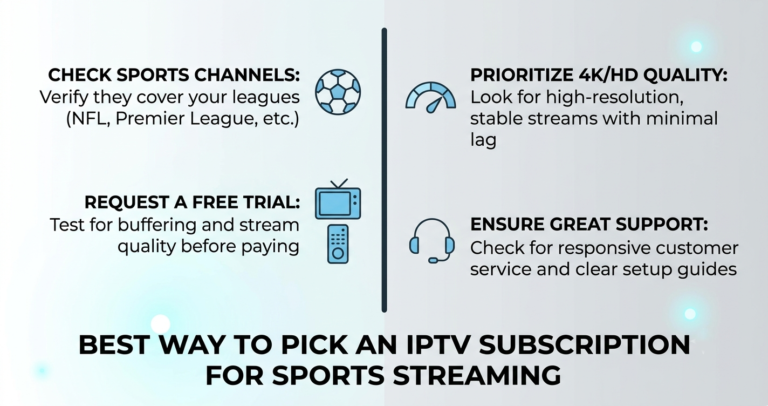
- Test Apollo IPTV during a live sporting event, not off-peak
- Confirm your broadband speed is consistently above 25Mbps before blaming the service
- Check whether your ISP (especially Sky or Virgin) is known for IPTV throttling
- Set up your preferred app (TiviMate recommended) before your trial expires
- Verify EPG is loading correctly on your specific device during the trial period
- Understand the refund/replacement policy before paying for a longer subscription
For New Resellers:
- Ask the supplier directly about simultaneous connection limits per account
- Run your trial during a peak sports evening — weekday afternoons are not representative
- Understand credit expiry terms before bulk purchasing
- Document the support response time during your trial; it reflects what your customers will experience
- Compare Apollo’s panel structure against at least one alternative before committing
For Established Resellers:
- Track which customers report buffering by ISP type — patterns reveal infrastructure weaknesses
- Monitor churn within 30 days of signup; high early churn indicates trial-period overselling
- Keep a competitor benchmark account running so you can cross-reference during outages
- Ensure you have a migration path ready — no single supplier dependency in this market is safe long-term
- Review your refund response time; the cost of slow refunds is customer reviews, not just credits
This Apollo IPTV review covers real-world UK usage patterns, infrastructure behavior, and UK IPTV reseller considerations as observed across the current market. It is intended as a practical evaluation tool, not a promotional endorsement. The industry changes fast — verify current service conditions through an active trial before making any subscription or reseller commitment.