Cheap IPTV UK Subscriptions: How to Actually Evaluate One Before You Buy
What you pay for a cheap IPTV UK subscription and what you actually receive are two completely different conversations, and most buyers only figure that out during a Premier League final at 87 minutes.
The UK market is flooded. Hundreds of resellers are undercutting each other by pennies while quietly running panels off a single shared uplink with zero redundancy. The £3.99/month deal you found on a Telegram group last Tuesday? That reseller probably bought 50 panel credits from a wholesale provider, marked them up by 40%, and has no idea what CDN even stands for.
This guide is not a product comparison sheet. It’s a breakdown of how to evaluate a cheap IPTV UK subscription the way someone inside the industry would, looking at infrastructure signals, reseller behaviour, and the quiet technical tells that separate genuinely good value from a subscription that will buffer itself to death by week two.
What “Cheap” Actually Buys You in the UK IPTV Market
Price is almost never the real variable. The real variable is margin structure, how much the UK IPTV reseller compressed cost to get to that number, and what got cut to make it work.
A cheap IPTV UK subscription priced at £4-6/month typically sits in one of three categories:
Wholesale panel resale: bought in bulk, no server ownership, entirely dependent on upstream provider uptime
Shared HLS stream delivery: lower cost per user but latency climbs sharply when concurrent viewership spikes (Friday evenings, bank holiday fixtures)
Trial-to-cancel models: priced low to generate volume, with churn baked into the business model from day one
None of these are automatically bad. Plenty of solid cheap IPTV UK subscriptions run on wholesale panels managed by technically competent resellers. The issue is that nothing in the price tells you which category you’re dealing with.
Pro Tip: Ask the reseller what happens to your service during a server migration. A blank response or a vague “it’ll be fine” is a red flag. A legitimate operator will tell you there’s a secondary endpoint that activates within 60 seconds of primary failure.
The Buffering Problem Nobody Explains Properly
Most buyers blame their broadband when streams freeze. Most of the time, it isn’t the broadband.
HLS latency, the delay built into how HTTP Live Streaming segments are delivered, compounds at the server level before a single packet reaches your router. When a cheap IPTV UK subscription runs on an undersized origin server with no edge caching, every user is pulling from the same bottleneck. Add 400 concurrent viewers hitting a premium sports stream simultaneously and buffering becomes structural, not incidental.
What actually causes the freeze:
Segment size too large: long HLS chunks mean longer rebuffer wait on network hiccup
No adaptive bitrate fallback: stream drops entirely rather than stepping down quality
Single origin, no CDN layer: all traffic hits one server with no geographic load distribution
DNS poisoning interference: UK ISPs have increasingly aggressive DNS-level blocking on IPTV endpoints, forcing reconnection loops that look like buffering
Fibre broadband doesn’t fix any of these. You can have a 1Gbps connection and still watch a pixelated, stuttering stream because the problem is upstream from your home entirely.
How UK ISP Blocking Has Evolved in 2026
This is where most articles stop being honest.
ISP blocking in the UK is no longer a simple blacklist. Since 2024, major ISPs have moved toward AI-assisted traffic classification, pattern recognition that identifies IPTV stream behaviour based on packet timing, connection persistence, and CDN fingerprinting rather than just domain matching.
What this means practically for anyone running or buying a cheap IPTV UK subscription:
Old method (pre-2024): Block the domain. Reseller points to new domain. Done.
Current method (2026): Classify the traffic pattern. Block the IP range. Flag the CDN fingerprint. The domain change doesn’t help anymore because the stream signature is what’s being targeted.
Resellers who haven’t adapted are cycling through domain changes every two weeks and wondering why blocks keep following them. The answer is that the infrastructure itself is the signal, not the URL.
| Blocking Method | Reseller Counter | Effectiveness in 2026 |
|---|---|---|
| DNS Blocking | Alternate DNS / DoH | Partially effective |
| IP Range Blocking | IP rotation, CDN swap | Moderate, delays blocks |
| Traffic Fingerprinting | Obfuscation layers, stream tunnelling | Required at scale |
| Deep Packet Inspection | Encrypted delivery + mimicry protocols | High technical overhead |
Buyers on cheap IPTV UK subscriptions are increasingly on the receiving end of infrastructure decisions made by resellers who haven’t invested in any of this. That’s worth knowing before you commit.
Backup Uplinks: The Feature Most Cheap Plans Skip
Redundancy is expensive. That’s why it’s missing from most cheap IPTV UK subscription offerings.
A backup uplink is a secondary internet pathway, separate ISP, separate routing, that activates when the primary server connection fails. Without it, a single upstream outage takes the entire panel offline. With it, failover happens in under a minute and most users never notice.
At the panel operator level, this typically means:
Dual uplink contracts (two separate ISPs at the server level)
Automated health monitoring with sub-60-second failover triggers
Geographically distributed backup stream sources for high-demand channels
Most cheap IPTV UK subscriptions don’t run on this infrastructure. Most don’t claim to, either, but the absence of it isn’t mentioned during the sale. You find out at 9pm on a Saturday when the EPG stops loading.
Pro Tip: Before purchasing, check whether the reseller has a documented status page or uptime history. Even a basic public status page (Uptime Robot, BetterUptime) signals that the operator is monitoring infrastructure rather than just reacting to complaints.
Reading a Reseller Before You Hand Over Money
The reseller layer is where most buyers get burned, not the underlying technology.
Wholesale IPTV infrastructure at the top end is reasonably stable. The weak point is the chain of resellers between the origin server and your device. A cheap IPTV UK subscription sold through a reseller with no panel management discipline, no customer rotation system, and no load monitoring is a liability regardless of what’s running underneath it.
Signals that a reseller knows what they’re doing:
- They can tell you their connection count per server (a good number is under 500 active streams per server)
- They have a clear refund or credit policy for downtime events
- They don’t promise 100% uptime (anyone who does is lying, uptime guarantees in this market are sales theatre)
- They respond to technical questions with actual technical answers, not marketing language
Signals that a reseller is winging it:
“Best quality in UK” with no specifics
Trial pricing that vanishes after the trial with no communication
No answer when asked what EPG provider they use
Panel credits that expire with no rollover
This matters more than almost any other factor when evaluating a cheap IPTV UK subscription. The infrastructure quality ceiling is ultimately set by the reseller’s competence, not the wholesale provider’s spec sheet.
Device Compatibility and Why It Keeps Being a Problem
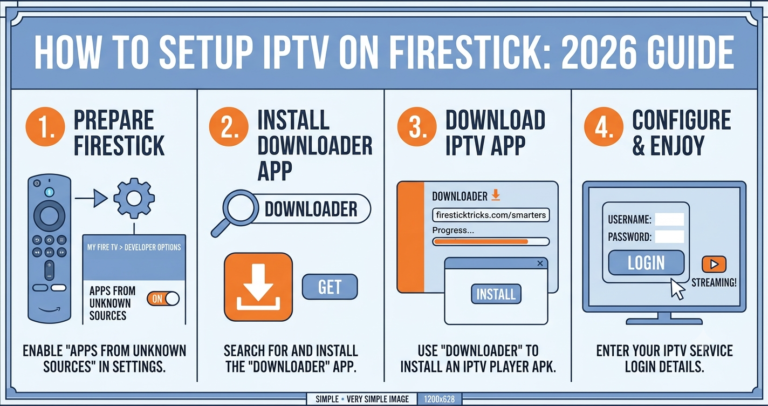
Not all cheap IPTV UK subscriptions are tested across device types before being sold. This creates a frustrating pattern: the service works fine on an Android box but stutters on Firestick, or loads correctly on IPTV Smarters but fails completely on TiviMate.
The technical reason is usually codec handling and buffering behaviour at the app level, not the stream itself. But the practical result is that a buyer tests on one device, it works, they recommend it, and then three people in the same household have problems because they’re using different hardware.
What to clarify before buying any cheap IPTV UK subscription:
- Which player does the reseller actively support and test against?
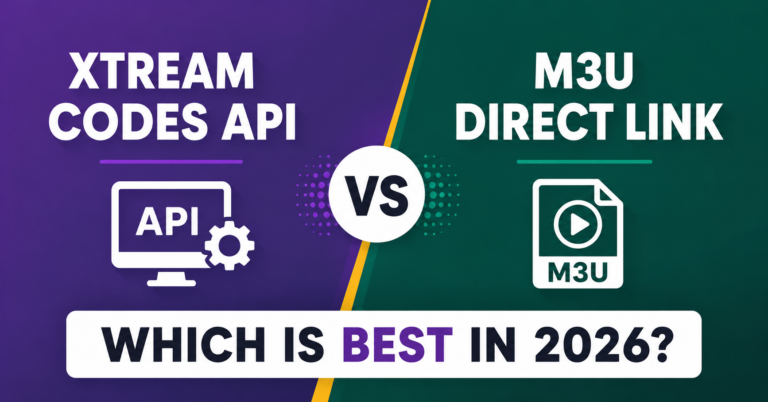
- Is the M3U URL format compatible with your specific app version?
- Does the EPG use XMLTV format or a proprietary feed?
- Is there a maximum concurrent connection limit per subscription?
One subscription, one connection. Most resellers enforce this. If you’re buying for a household of four screens, that’s four subscriptions, or a reseller package. Understanding that before purchase avoids the most common billing dispute in the market.
The Pricing Floor and What Sits Below It
There is a price point below which a cheap IPTV UK subscription becomes operationally impossible to sustain. Based on current UK infrastructure costs, bandwidth pricing, and panel licensing, that floor sits around £3.50-£4.00/month for a single-connection subscription with basic redundancy.
Anything priced below that is either:
Running at a loss to acquire users (short-term, expect the service to disappear)
Using infrastructure so undersized that the cost savings are structural degradation
Operating without any customer support overhead whatsoever
This doesn’t mean every £5 subscription is gold. It means every £2 subscription is a gamble with a known expiry date. The cheap IPTV UK subscription market does have genuine value at the £5-9/month range, that’s where most well-run resellers price their individual plans after accounting for panel costs, bandwidth, and a basic support layer.
Pro Tip: If a UK IPTV reseller is running a long-term loyalty discount rather than a permanent low price, that’s often a better signal than a headline rate. It means they’re pricing for sustainability, not just acquisition.
Scaling From Single Buyer to Sub-Reseller
Some buyers start with a cheap IPTV UK subscription for personal use and eventually move into reselling. That transition is where a lot of people underestimate the jump in technical responsibility.
Running one subscription requires zero infrastructure knowledge. Running thirty requires you to understand panel credit systems, connection monitoring, customer communication under downtime, and how to handle the ISP blocking exposure that comes with operating at scale.
Key differences at the reseller level:
Panel credits: pre-purchased line allocations from wholesale providers. Credits expire, don’t roll over, and have no refund policy if the upstream provider goes offline
Load balancing responsibility: at scale, you’re managing which users sit on which server to avoid single-server overload
Churn psychology: retention in this market is entirely built on reliability. One bad week during a major sports cycle can lose 40% of a customer base permanently
Starting with a reputable cheap IPTV UK subscription as a personal user is smart. It lets you evaluate the infrastructure from the consumer side before committing capital to a UK IPTV reseller panel. Treat it as a paid technical audit of the provider before investing.
Success Checklist for Cheap IPTV UK Subscription Buyers
Before you buy:
Confirm the reseller can name their CDN or server hosting provider (not the product name, the actual infrastructure)
Ask specifically about backup uplink availability
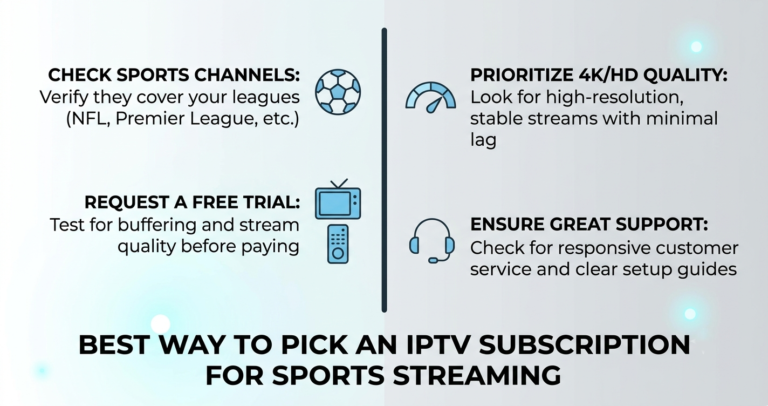
Request a 24-hour trial before full payment, since any serious operator offers this
Verify device compatibility with your specific hardware and player combination
Understand the connection limit per subscription line
During the trial:
Test during peak hours (Friday 7-10pm, Saturday/Sunday afternoon)
Check EPG accuracy across at least 15 channels
Stress test with a simultaneous stream on a second device to see if it cuts the first
Note channel load time, since anything over 4 seconds on a 50Mbps+ connection is a server-side issue
Long-term evaluation:
Track downtime frequency over 30 days, not duration, frequency (two 5-minute outages is operationally worse than one 20-minute outage in some use cases)
Monitor whether the UK IPTV reseller communicates proactively during issues or only responds to complaints
Assess whether the cheap IPTV UK subscription holds up under ISP blocking events, since it should recover automatically rather than requiring manual DNS changes on your end
The cheap IPTV UK subscription market rewards informed buyers. The gap between a £5 service that runs flawlessly for twelve months and a £5 service that collapses in six weeks has nothing to do with price. It has everything to do with knowing what questions to ask before the money moves.